Why Tier-1 Suppliers Are Accelerating Direct Integrations with UAS OEMs
Implications for defence and dual-use business development, capture, and procurement


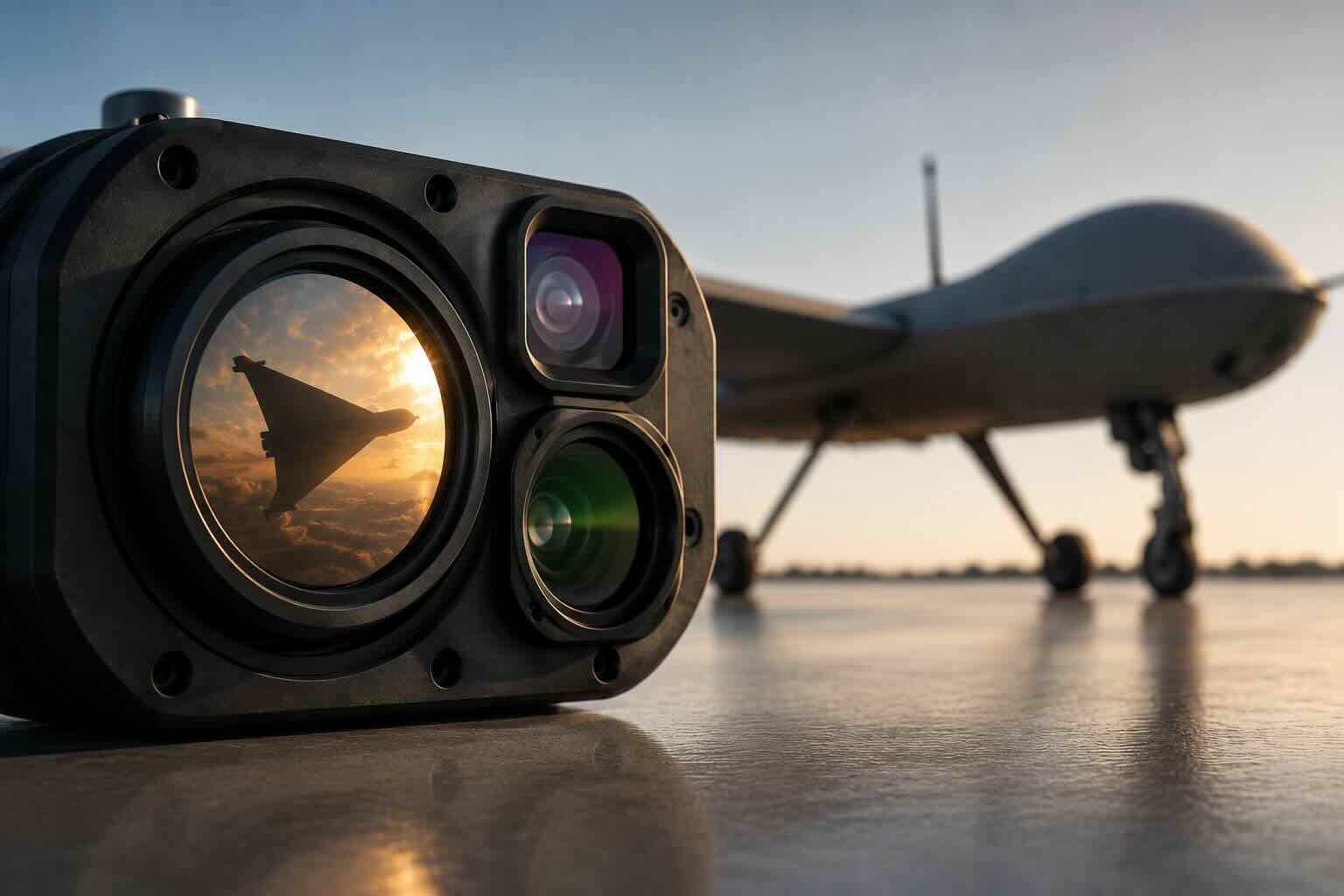
Skyeton develops its Raybird fixed-wing platform under sustained operational pressure. Quadsat builds RF antenna testing systems for commercial satellite operators, operating in a domain defined by space programmes and telecom infrastructure rather than tactical drones.
Under a conventional defence development model, these two companies would not naturally meet inside a platform architecture. Advanced niche technologies typically enter through prime-led programmes, structured requirement cascades, and formal sourcing pathways.
Skyeton and Quadsat collaborated through a demonstration-led innovation pathway.
Quadsat adapted its RF antenna testing and measurement into spectrum monitoring for defense within Skyeton’s platform. This was achieved without a prime-led programme and without a formal tender, but through direct integration and operational deployment.
This is not an isolated case, as it reflects a broader development logic emerging in unmanned systems.
In European drone programmes, production volumes remain limited while operational deployment often precedes formal procurement. Platform-level integration and sustained operational use increasingly function as validation. Capabilities embedded early and demonstrated at scale accumulate reference value that later shapes requirements and competitive outcomes.
This article examines how Tier-1 suppliers are operating within this model, and what it means for defence and dual-use business development and capture.
What is Changing in Tier-1–UAS Integration
Across multiple cases, similar capability categories are shaping platform architectures at integration stage.
Sensors and payloads originally developed for satellites, fighter aircraft, and large ISR platforms are being adapted to smaller unmanned systems. Software is becoming the layer that determines interoperability and autonomy at fleet level. Energy performance, such as endurance, safety, thermal behaviour, is increasingly treated as a bid-level discriminator rather than an internal engineering concern. At the same time, propulsion suppliers are using unmanned platforms as a faster, lower-risk way to enter or re-enter aviation programs.
These integration choices shape platform architectures early and persist as technical constraints throughout the lifecycle.
The Volume Constraint in European Unmanned Systems
European defence and dual-use procurement currently offers limited opportunities for sustained, high-volume deployment of unmanned systems. Most programmes remain small, incremental, or pilot-scale, even where technical ambition is high.
This has a direct impact on how capabilities are evaluated. In unmanned systems, certification and formal compliance alone are no longer sufficient indicators of readiness. Increasingly, customers and primes look for evidence that a system, subsystem, or component has survived sustained operational use at scale, including production throughput, maintenance cycles, and replacement under attrition.
As a result, operational volume has become a form of validation in its own right. A capability that has been integrated, produced, and operated in the hundreds or thousands of units carries a different weight than one proven only through demonstrations or limited series.
For Tier-1 suppliers, this changes the strategic value of early integration. It is not primarily about near-term revenue or programme capture, but about access to environments where production learning, reliability, and system robustness can be demonstrated under real conditions.
This dynamic helps explain why platforms that achieve scale outside Western European procurement cycles increasingly shape downstream requirements and evaluation criteria inside them.
The Bundeswehr’s FALKE order procured just 14 Vector short-range systems through a lean competition for an off-the-shelf capability, whereas the MALE track (Heron TP interim and Eurodrone long-term) follows the classic prime-led, multinational, multi-billion-euro programme model defined before the Russian full-scale invasion of 2022.
Why Ukrainian OEMs Matter
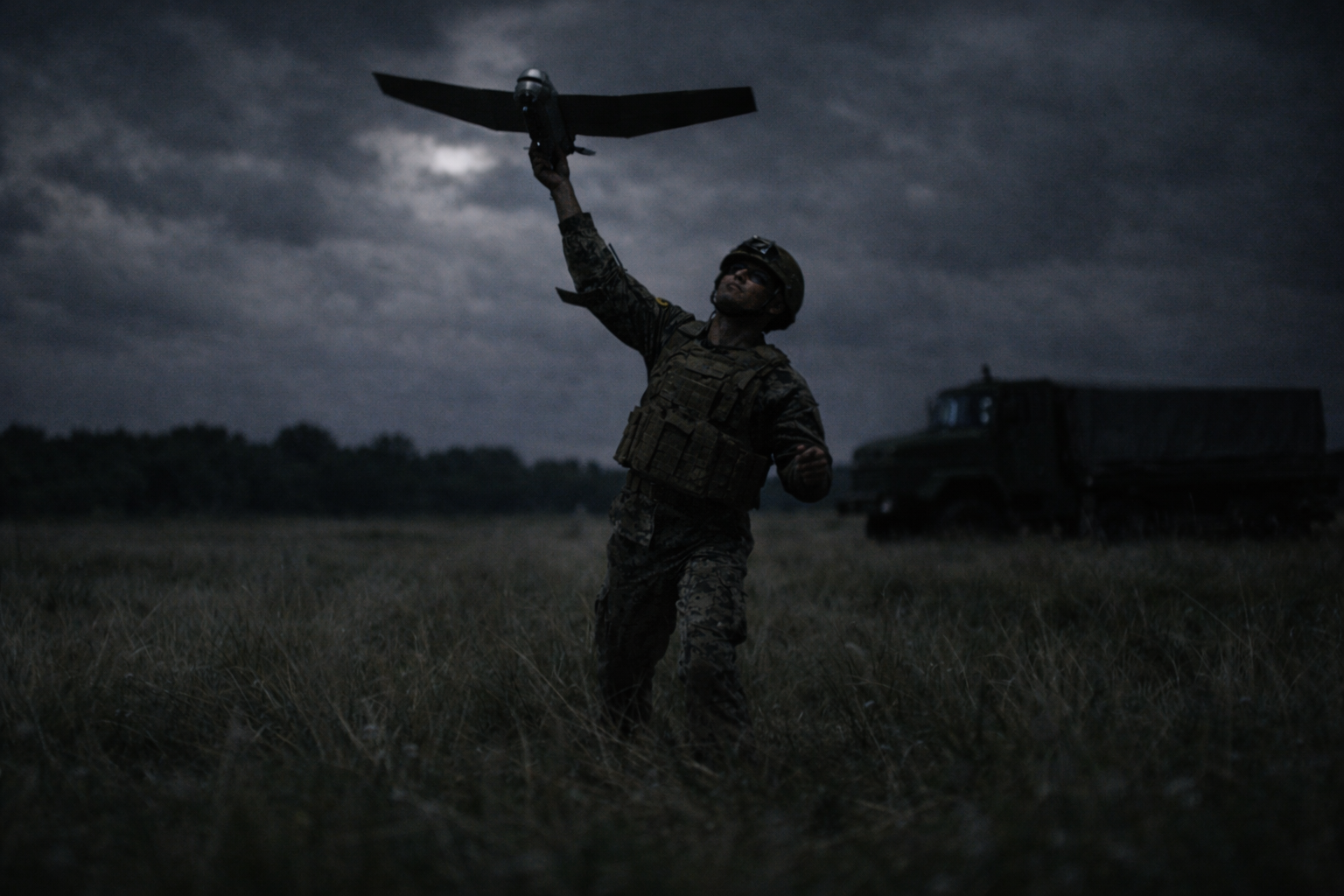
Ukrainian UAS manufacturers appear repeatedly in these partnerships because of how they work. This role reflects operating conditions, mandatory tight feedback loops with end users, and integration speed, not geography.
Their systems are deployed continuously, integration cycles are short, and changes are driven directly by operator feedback. For suppliers, this provides rapid operational validation and clear evidence of relevance. Capabilities proven in this context are later reused in European national programs, EU-funded initiatives, and NATO-aligned procurements with stronger reference value during later qualification and evaluation phases.
Engagement with Ukrainian OEMs is therefore not primarily about immediate commercial scale, but rather about demonstrating survivability, manufacturability, and sustained performance at operational volumes that European programmes do not provide yet.
Implications for Tier-1 Business Development Teams
1. Operational Scale Functions as Validation
In European unmanned systems, programme volumes remain limited. Demonstrated operational scale therefore functions as validation in its own right. In this environment, reference depth – production throughput, maintenance cycles, survivability under sustained use – becomes a competitive asset that influences later procurement decisions.
2. Integration Is a Positioning Strategy
For business development teams, this affects the sequencing and allocation of effort. Securing integration into a platform capable of sustained deployment may create more long-term positioning value than optimising for specification compliance within a low-volume programme. Integration becomes not only a technical exercise, but a means of building reference capital that shapes future evaluation outcomes.
3. Prioritisation Becomes Strategic
This does not replace established capture practice. It requires earlier and more deliberate prioritisation. Teams that perform well in this space engage with UAS OEMs at platform stage, adapt existing capabilities for rapid integration, and track partner ecosystems alongside formal programmes. Crucially, they apply disciplined platform selection: not every integration opportunity generates strategic value. Platforms must be assessed for their likelihood of sustained deployment, production continuity, and downstream procurement relevance.
4. Reference Depth Shapes Later Competition
Where operational volume can be achieved, suppliers gain more than early access. They accumulate production learning, reliability data, integration experience, and maintenance evidence – assets that materially influence later competitions. Without that exposure, differentiation in formal procurement often narrows to price, schedule, and incremental performance deltas.
When engagement begins later, teams frequently encounter platforms whose architectural choices, as well as associated reference base, have already been established elsewhere. At that stage, competition remains possible, but it takes place within boundaries defined by prior integration and demonstrated performance.
In this context, the strategic question for Tier-1 business development is not only which tenders and other opportunities to pursue, but which platforms can generate credible validation at scale, and how early to commit resources to secure that position.
What This Means in Practice:
- Prioritise platforms capable of sustained operational deployment
- Treat integration as reference-building, not just technical embedding
- Allocate engineering support based on scale potential
- Compete on reference depth, not specification alone
Closing
The collaborations described here are not isolated events. They reflect how capabilities in unmanned systems are integrated, validated, and positioned in an environment where European programme volumes remain limited.
For Tier-1 suppliers, early positioning is not new. What matters is where credible validation now occurs, and how operational scale translates into reference power. In this context, integration decisions taken before formal procurement can shape competitive outcomes long after tenders are issued.
The capability areas touched on sensors, software, energy, propulsion, autonomy will be analysed separately in follow-up articles, focusing on competitive dynamics and capture implications.